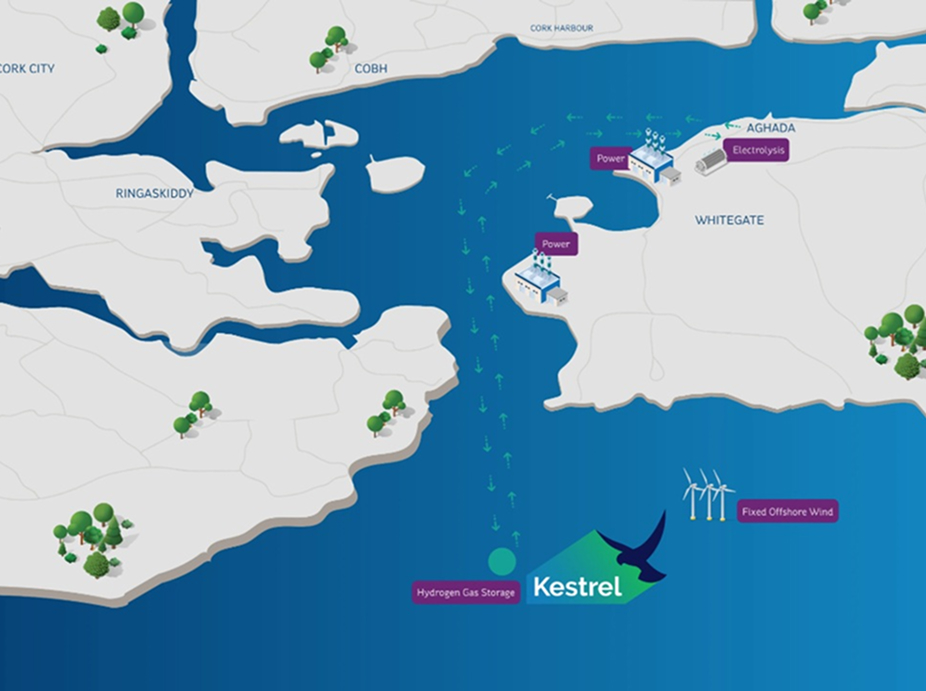
Long-duration energy storage serves a dual purpose: strengthening energy security in the short-medium term and enabling long-duration energy storage in a future system reliant on intermittent renewable energy generation.
Despite progress in electricity decarbonisation, Ireland still lacks the long-duration energy storage required to support a fully decarbonised power system. Natural gas continues to underpin home heating and electricity generation, while electricity accounts for only around 30% of Ireland’s Total Primary Energy Requirement, highlighting the scale of the transition still underway.
With Corrib supplying approximately 20% of national demand, most gas is imported via the UK. Without indigenous storage, Ireland has no buffer against supply shocks, price volatility or system stress.
Long-duration storage therefore serves a dual purpose: strengthening energy security and resilience in the near term, while enabling future storage of green hydrogen or biomethane to support a net-zero energy system.

Lorem ipsum
Ireland currently has no indigenous, long-duration gas storage, leaving the country exposed to prolonged supply disruption, system stress and price volatility. Kestrel would address this gap by providing a strategic reserve at national scale.
Kestrel is designed to work alongside the Government’s proposed FSRU. The FSRU would diversify gas imports and provide short-term flexibility, while Kestrel would provide the long-duration indigenous reserve needed for sustained resilience.
Offshore and underground, Kestrel provides a multi-TWh long-duration storage solution capable of supporting deep decarbonisation quietly, sustainably and with limited community impact. It enables greater integration of renewables by storing surplus energy and complements batteries and interconnection while providing storage at a scale they cannot match.
Kestrel is being engineered for green hydrogen, making it a future-proof asset that evolves with Ireland’s offshore wind ambitions and avoids the stranded-asset risks facing other legacy infrastructure. It is fully aligned with the National Hydrogen Strategy, will support future green hydrogen produced from offshore wind, and is designed to transition to hydrogen use without significant retrofit.